

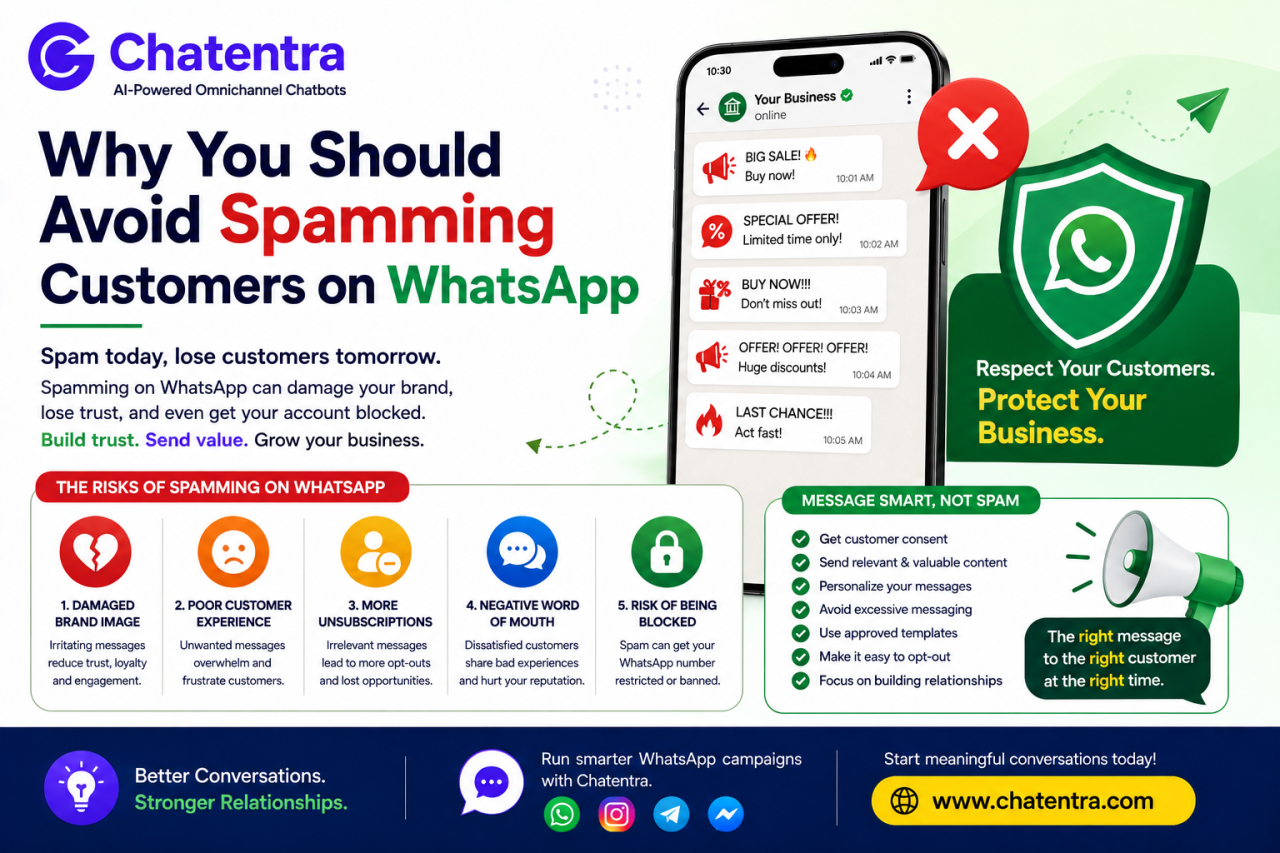
WhatsApp can be a powerful channel for customer communication, marketing, and sales. However, sending excessive, irrelevant, or unsolicited messages can quickly turn a useful communication channel into a source of frustration.
WhatsApp spam can damage customer trust, reduce engagement, harm your brand reputation, and potentially result in restrictions or account suspension.
Instead of focusing on sending more messages, businesses should focus on sending relevant messages to customers who have chosen to hear from them.
Here are some reasons why businesses should avoid spamming customers on WhatsApp.
1. WhatsApp Spam Can Damage Your Brand Reputation
Customers don’t appreciate being bombarded with unwanted messages. Repeated promotions or irrelevant content can make your business appear intrusive and unprofessional.
When customers become frustrated, they may ignore your messages, block your number, or share their negative experiences with others.
Over time, this can reduce customer trust, engagement, and loyalty.
2. It Creates a Poor Customer Experience
Customers expect businesses to respect their time and preferences.
Sending multiple messages, repetitive promotions, or irrelevant content can make customers feel overwhelmed. Instead of creating engagement, excessive messaging can push customers away.
A better approach is to send useful, timely, and relevant communication based on customer interests and consent.
3. Customers May Opt Out
When customers receive too many unwanted messages, they are more likely to unsubscribe, stop engaging with your business, or block your account.
Once customers lose interest in your messages, it becomes much harder to rebuild that relationship.
4. Spam Can Generate Negative Word of Mouth
A poor messaging experience doesn’t always stay private. Customers can share their experiences with friends, colleagues, or on social media.
Negative feedback about aggressive marketing can damage your reputation and influence potential customers who are researching your business.
A good messaging strategy should build relationships—not give customers a reason to complain about your brand.
5. Excessive Messaging Can Put Your WhatsApp Account at Risk
WhatsApp and Meta have policies designed to protect users from unwanted and abusive communication.
Businesses that engage in spam-like behavior, send unsolicited messages at scale, or repeatedly receive negative feedback may face restrictions on their messaging capabilities or account.
Businesses should therefore ensure that their messaging practices comply with applicable WhatsApp Business and Meta policies.
How to Market Responsibly on WhatsApp
Instead of spamming customers, businesses can use Chatentra to create more effective and customer-friendly campaigns.
- Get customer consent before sending marketing messages.
- Send relevant content based on customer interests.
- Avoid excessive messaging and respect customer preferences.
- Personalize campaigns where appropriate.
- Use approved message templates where required.
- Segment your contacts to send more targeted messages.
- Provide an easy way to opt out of marketing communications.
- Monitor campaign performance and customer engagement.
- Focus on value, not simply message volume.
Turn WhatsApp Messaging Into Meaningful Conversations
Successful WhatsApp marketing isn’t about sending the most messages. It’s about sending the right message to the right customer at the right time.
With Chatentra’s Broadcasting & Campaigns, businesses can organize contacts, manage campaigns, use approved templates, and monitor campaign performance while creating more targeted customer communication.
Don’t spam. Start conversations that customers actually want to have.
Discover smarter customer communication with Chatentra at www.chatentra.com.